CBD explained: composition, forms, quality and safety.
Knowledge base
CBD is short for cannabidiol, a compound from the hemp plant. This page is the starting point: what the compound is, why it doesn't get you high, which forms it is sold in and how to read a label. Everything that is covered briefly here has its own page further on, so you don't have to take it all in at once.
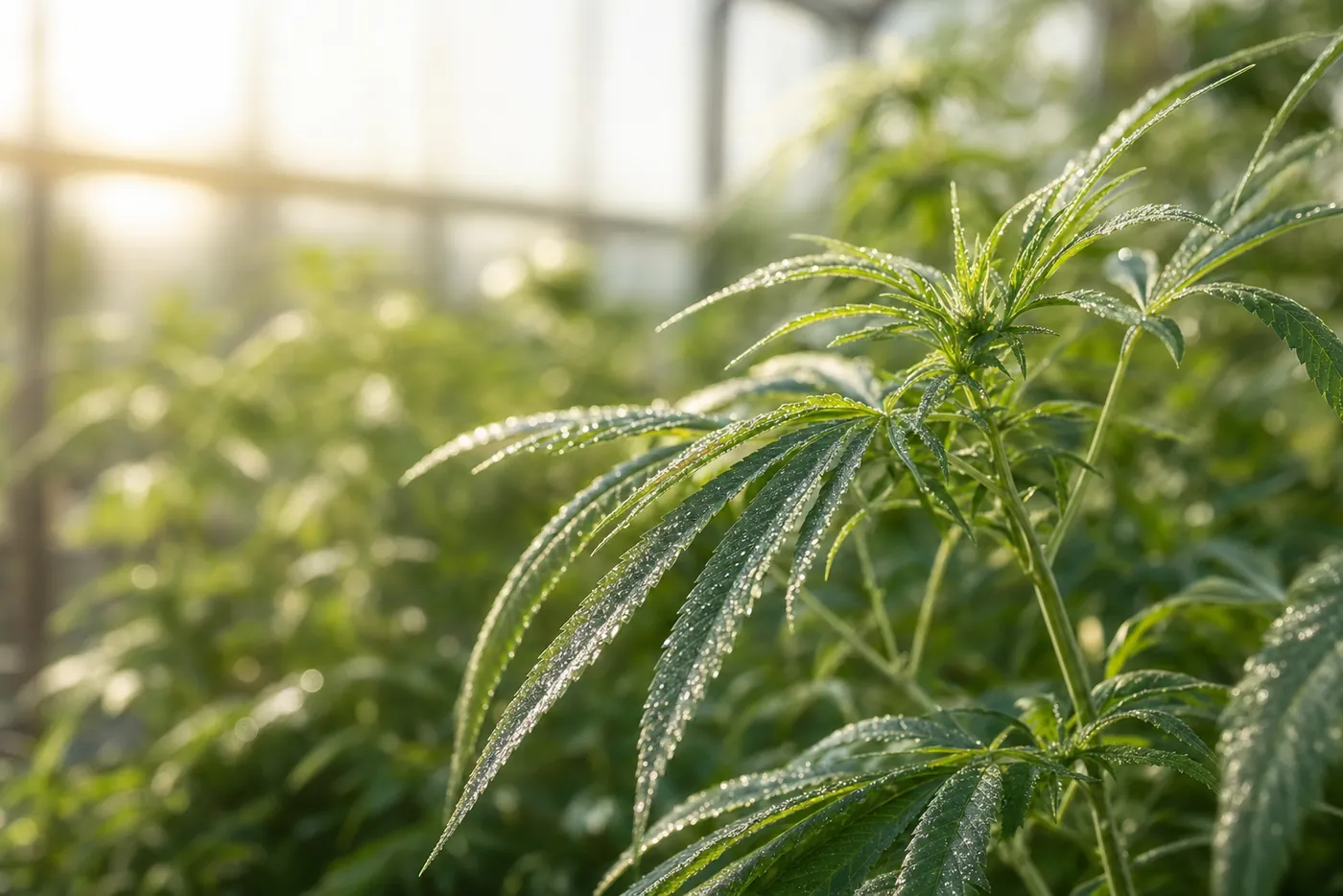
What is CBD?
Cannabidiol is one of the more than a hundred cannabinoids in the hemp plant. It is not psychoactive, so it doesn't get you high.
One thing makes writing about CBD confusing: three different things go by more or less the same name. There is the compound itself, there is the extract that comes out of the plant and contains that compound, and there is the finished product that the extract goes into. Once you keep those three apart, the rest becomes a lot easier to read.
How does CBD differ from THC?
CBD and THC come from the same plant, but THC is psychoactive and CBD is not. That difference also shapes how the law treats the two compounds, and why producers have the THC content of their products measured. Read the full explanation of the difference between CBD and THC.
Hemp or cannabis: are they the same?
Botanically, yes. Both are Cannabis sativa L. We use the word hemp for varieties that contain so little THC that they are of no interest for smoking; they are grown for fibre, seeds and CBD. Marijuana is the same crop, but bred for a high THC content. So the difference lies in the variety and what it is meant for, not in the species.
Which compounds can a CBD extract contain?
Besides CBD, a hemp extract contains other plant compounds: other cannabinoids (such as CBG, CBC and CBN), terpenes (the compounds behind smell and taste) and flavonoids. Which compounds are in a specific product is stated in the product specifications and in the matching quality report.
Which types of CBD extract are there?
There are three main types of extract. They differ in which plant compounds are kept.
| Extract type | What it contains | THC |
|---|---|---|
| Full spectrum | The broad range of cannabinoids, terpenes and other plant compounds | Depends on processing; may contain traces or be brought down below the detection limit |
| Broad spectrum | A broad range, but with THC removed in a targeted way | Not detectable |
| Isolate | Pure CBD only | None |
How Renova uses these terms, and what 0.0% THC means exactly, is on the page about THC-free.
Which product forms is CBD available in?
CBD is mainly sold as oil, capsules, patches and skin products. The form determines the unit in which the amount of CBD is expressed and how you use the product.
| Form | Unit | Characteristic |
|---|---|---|
| Oil | Percentage and milligrams per drop | Dropper, amount you adjust yourself |
| Capsule | Milligrams per capsule | Fixed amount per piece, tasteless |
| Patch | Milligrams per patch | Fixed amount, discreet to wear |
| Skin product | Milligrams per pack | External use, massage oil for example |
Want to see the forms side by side? Use the product comparison.
How do you read CBD percentages and milligrams?
A percentage tells you about concentration, a milligram about quantity. Two products with the same percentage can contain a different amount of CBD per drop or per pack. How to convert and compare those figures is on the page about percentages and milligrams.
What determines the quality of a CBD product?
You can read the quality of a CBD product from features you can check: the origin of the hemp, the extraction method, the composition, the THC result, tests for contaminants and a batch report that records all those values. How that testing works at Renova is explained in the quality overview.
What safety information goes with CBD?
CBD is not a medicine, and the health effects of CBD supplements have not been officially established. There are groups for whom extra caution applies, such as people who take medication and pregnant women. The full safety information, including when to consult a doctor or pharmacist, is on the safety page.
What should you look for when comparing products?
Six things get you a long way: the form, the ingredients, how much CBD is in the whole pack, how much per drop or capsule, what the label says about use, and whether there is a batch report to be found. That last one is the question most brands find hardest. The product comparison puts those criteria side by side.
Where can you find the specifications of Renova products?
Every Renova product page shows the full specifications, from ingredients to the THC result, with a link to the current batch report. See the product overview or go straight to the quality reports.
From knowledge to choice?
You now know what CBD is and what to look for. See the Renova products with all their specifications, or put the forms and strengths side by side first.